
love & leadership
more stories

By Kim Anthony
•
July 15, 2026
The 21st Century ROAD to Housing Act, signed into law on July 11, 2026, represents one of the most comprehensive federal housing policy packages enacted in decades—and could create significant opportunities for Inland Empire communities, developers, small businesses and residents seeking greater economic mobility. According to an analysis by the Bipartisan Policy Center, the final legislation brings together provisions from more than 60 previously introduced bills, including 36 measures with bipartisan sponsorship. The package addresses nearly every part of the housing system, from development approvals and affordable housing financing to manufactured housing, homeownership, community banking and neighborhood revitalization. After months of negotiations, the Senate approved the legislation by an 85–5 vote on June 22, followed by a 358–32 vote in the House on June 23. What’s in the Final Deal? The final law combines major elements of earlier House and Senate housing proposals while preserving several negotiated compromises. Among the most notable provisions, the law: Raises the cap on the Rental Assistance Demonstration program by 100,000 units. Authorizes the Community Development Block Grant Disaster Recovery program for three years. Creates a new Moving to Work program cohort focused on economic opportunity and pathways to independence. Retains nine community banking provisions initially included in the House legislation. Restricts certain large institutional investors from purchasing additional single-family homes while maintaining an exception for properties constructed or acquired specifically for rental use. Establishes a HUD renter-outreach resource for tenants living in properties owned by institutional investors. For the Inland Empire , however, some of the law’s most consequential provisions are those designed to accelerate housing construction, unlock underused property and expand access to capital. More Resources for Cities That Build Housing The law establishes a $200 million annual Innovation Fund for local governments and tribal communities that demonstrate measurable increases in housing production. Communities could qualify by adopting policies such as streamlined permitting, density bonuses, zoning reforms and faster development approvals. The program is authorized for seven years. For Inland Empire cities confronting rapid population growth and housing affordability challenges, the fund could provide additional resources to modernize permitting systems, increase planning capacity and move housing projects through the approval process more efficiently. That could also create opportunities for local planning firms, architects, engineers, environmental consultants, technology providers and businesses that help cities improve development processes. New Support for Planning and Infrastructure The legislation creates a competitive HUD grant program to help cities, counties, tribal governments and regional planning agencies undertake housing-related planning and community development. Eligible activities include updating regulatory processes, increasing inspection capacity and coordinating housing development with transportation planning. This provision may be especially important for the Inland Empire , where housing growth must be coordinated with transportation, employment centers, schools, utilities and other infrastructure. It could help communities better connect new housing to major job corridors, transit systems and commercial districts—while generating contracting opportunities for local consultants, construction professionals and professional-service firms. Converting Vacant Buildings Into Housing The law also creates the Revitalizing Empty Structures Into Desirable Environments Act, or RESIDE Act, pilot program. The program will help local governments convert vacant commercial and industrial buildings into affordable housing, with priority given to economically distressed communities and Opportunity Zones. Across the Inland Empire, this could support the redevelopment of underused office buildings, aging shopping centers, vacant retail properties and obsolete commercial spaces. Adaptive-reuse projects can create opportunities for: General contractors and subcontractors Architects and engineers Environmental and remediation firms Interior designers Property managers Building-material suppliers Landscapers and maintenance providers Neighborhood-serving retailers and restaurants Transforming vacant buildings can also place new residents closer to existing businesses, helping restore foot traffic and consumer spending in older commercial corridors. More Affordable Housing Financing The law makes affordable housing construction an eligible use of Community Development Block Grant funding. It also increases the amount banks may invest in affordable housing and community development projects through public-welfare investments—from 15% to 20% of their capital and surplus. These changes could expand the financing available for affordable and mixed-income developments, particularly when federal resources are combined with state, county, city and private investment. For the Inland Empire development community , this could make it easier to assemble complex financing packages and move projects that might otherwise remain financially infeasible. It may also strengthen opportunities for community development financial institutions, minority depository institutions, mission-oriented lenders and nonprofit housing organizations. Faster Environmental Reviews Several sections of the law are intended to reduce duplication and delay in federal environmental reviews. The legislation expands categorical exclusions for certain federally supported housing activities, gives HUD greater authority to delegate environmental responsibilities to state and local governments, and streamlines reviews for smaller projects, infill developments and certain affordable housing activities. The reforms do not eliminate local or state development requirements. However, they may reduce the time and administrative expense associated with overlapping federal reviews. For developers, shorter approval timelines can lower carrying costs and reduce uncertainty. For small contractors and professional firms, projects that move forward more quickly can translate into more consistent work and faster payment cycles. Pre-Approved Housing Designs Through the Accelerating Home Building Act, local governments and tribes may receive grants to adopt pre-reviewed housing designs for accessory dwelling units, duplexes, townhomes and other forms of affordable housing. This could help Inland Empire cities standardize commonly requested designs and shorten review times for property owners and small-scale developers. Pre-approved plans could make it easier for: Homeowners to add accessory dwelling units. Small builders to complete infill projects. Families to create multigenerational housing. Property owners to generate rental income. Communities to add housing without relying solely on large developments. For entrepreneurs, this provision may create a new market for firms specializing in ADUs , prefabricated construction, permitting assistance, financing and property management. Expanded Opportunities in Manufactured and Modular Housing The legislation includes an entire title focused on manufactured and modular housing. It eliminates the permanent-chassis requirement for certain manufactured homes, increases FHA-insured manufactured housing loan limits, supports the preservation of manufactured housing communities and directs HUD to identify barriers facing modular housing developers. Manufactured and modular construction could be particularly valuable in the Inland Empire because it may allow housing to be produced more efficiently and at a lower cost than some traditional construction methods. The reforms may generate opportunities for local manufacturers, transportation companies, site-preparation contractors, installers, utility providers and businesses supporting manufactured-home communities. Greater Access to Small Mortgages The law authorizes an FHA pilot program designed to expand access to mortgages of less than $100,000. It also requires federal regulators to examine how fees and mortgage-originator compensation practices affect the availability of smaller loans. Although many Inland Empire homes cost substantially more than $100,000, small-dollar mortgages may still support the purchase or rehabilitation of manufactured homes, homes in certain rural areas and lower-cost properties requiring repairs. Greater access to responsible mortgage financing could help more renters begin building equity while creating additional business for community lenders, mortgage professionals, real estate agents, appraisers and housing counselors. Appraisal Workforce Opportunities The legislation reforms appraisal licensing and training, adds flexibility for trainee appraisers a nd authorizes grants supporting appraisal workforce development. This could create new career pathways for Inland Empire residents while helping address appraisal shortages that can delay real estate transactions. For workforce-development organizations, colleges and professional associations, the provision presents an opportunity to introduce more residents— including people from communities historically underrepresented in the profession —to appraisal careers. Strengthening Community Banks and Local Lending The final law retains nine provisions focused on community banks and credit unions. Among other changes, the legislation supports the formation of new community banks and minority depository institutions, establishes greater regulatory flexibility for smaller financial institutions and formalizes a mentor-protégé program pairing large banks with smaller, rural and minority-owned institutions. A stronger community banking sector could benefit Inland Empire entrepreneurs who often struggle to obtain financing from larger institutions. Locally focused banks and credit unions may be more willing to evaluate borrowers based on community relationships, business potential and local market knowledge. That could expand access to mortgages, construction financing, small-business loans and community development capital. Limiting Institutional Purchases of Single-Family Homes The Homes Are for People, Not Corporations provision restricts large institutional investors that own at least 350 single-family homes from purchasing additional newly available single-family homes. The law includes exceptions, including for institutional investors purchasing or constructing homes specifically intended for the rental market. The provision may give individual buyers a better opportunity to compete for certain homes, although its ultimate effect will depend on implementation and the availability of housing in each local market. For Inland Empire families, improved access to homeownership can support long-term wealth creation. Homeownership also generates economic activity for real estate professionals, lenders, insurance agents, contractors, furniture stores and home-service businesses. Why this Housing Bill is Important to Inland Empire Business and Communities Housing policy is also economic-development policy. When employees cannot afford to live near their jobs, businesses face longer commutes, higher turnover and greater difficulty recruiting workers. Housing instability can also affect attendance, productivity and household spending. Increasing the supply of housing at a variety of price points could help Inland Empire employers attract and retain workers while allowing more residents to live closer to employment opportunities. New housing development also supports a broad network of small and microbusinesses—not only large developers and construction companies. Projects require surveyors, electricians, plumbers, roofers, painters, landscapers, security firms, caterers, marketing companies, accountants, attorneys, insurance brokers and dozens of other local vendors. Once residents move in, they create demand for childcare, healthcare, retail, restaurants, transportation and personal services. An Economic-Mobility Opportunity For working families, housing is one of the most important foundations of economic mobility. Stable and affordable housing makes it easier for people to remain employed, pursue education, start businesses and accumulate savings. Homeownership can provide an opportunity to build intergenerational wealth, while affordable rental housing can give families the financial breathing room needed to invest in their futures. The new law also supports whole-home repair programs that can provide grants or forgivable loans to homeowners and landlords for property repairs and modifications. For lower-income homeowners and older adults, these resources could help preserve existing homes, prevent displacement and support aging in place. They could also generate work for local repair contractors and skilled tradespeople. What the Inland Empire Should Watch Next The passage of the legislation is only the beginning. Federal agencies must now develop regulations, launch grant programs and establish implementation timelines. Inland Empire cities, counties, housing authorities, developers, lenders and community organizations should begin identifying projects and partnerships that could benefit. Local leaders should pay particular attention to: HUD planning and housing-production grants The $200 million annual Innovation Fund Commercial-to-residential conversion funding Whole-home repair pilot programs Manufactured and modular housing reforms Community bank and minority depository institution initiatives Appraisal workforce-development grants Changes to CDBG and HOME funding Pre-approved housing design programs The most successful Inland Empire communities will likely be those that begin preparing early—building partnerships, identifying underused properties, reviewing local permitting systems and creating pipelines of projects that can compete for new federal resources . The Bottom Line The 21st Century ROAD to Housing Act will not solve the region’s housing affordability crisis on its own. Land costs, interest rates, construction expenses, infrastructure needs and local approval processes will remain significant challenges. However, the legislation provides new tools that could help Inland Empire communities build and preserve more housing, revitalize underused properties, strengthen local financial institutions and create pathways to homeownership. For the region’s business and development community, the law represents more than a housing package. It is a potential pipeline of investment, contracts, jobs, entrepreneurship and neighborhood renewal. Source: Bipartisan Policy Center, “Inside the Deal: What’s in the Final 21st Century ROAD to Housing Act,” updated to reflect the law enacted July 11, 2026.

By UBJ Staff
•
July 15, 2026
California's newly approved 2026–27 State Budget includes continued investment in Calbright College , signaling the state's ongoing commitment to expanding economic opportunity through education and workforce development. Following the budget's passage and Governor Gavin Newsom's signature, Calbright College President and CEO Ajita Talwalker Menon thanked state leaders for supporting an education model designed specifically for working-age adults. The investment reinforces California's strategy of helping adults earn career-focused credentials through flexible, online learning combined with personalized coaching and support—making education more accessible for people balancing work, family, and other responsibilities. For entrepreneurs and small business owners across the Inland Empire, this investment goes beyond education—it represents an opportunity to strengthen the local workforce. As businesses continue to struggle with hiring and retaining skilled employees, programs like Calbright can help workers develop in-demand skills in areas such as project management, information technology, cybersecurity, data analysis, and customer relationship management without leaving the workforce. A stronger talent pipeline benefits employers by: Expanding the pool of job-ready workers. Helping existing employees upskill while remaining employed. Reducing recruitment and training costs. Improving employee retention through career advancement opportunities. Supporting business growth with a more adaptable workforce. For entrepreneurs, the availability of flexible workforce training also makes it easier to hire individuals who are actively investing in their own professional development. Small business owners can encourage employees to pursue credential programs that strengthen skills without requiring traditional classroom schedules. A Boost for Economic Mobility The budget investment also supports California's broader goal of increasing economic mobility by creating more pathways into quality careers. For many adults—including career changers, parents returning to the workforce, veterans, and first-generation college students—flexible education can provide a faster route to higher wages and greater financial stability. Communities like the Inland Empire, where small businesses drive much of the local economy, stand to benefit as more residents gain the skills employers need while entrepreneurs gain access to a stronger, more competitive workforce. For the Urban Business Journal community, this is another reminder that investing in people remains one of the smartest investments any economy can make. A more skilled workforce doesn't just create better employees—it creates future entrepreneurs, stronger local businesses, and more resilient communities.

By Kim Anthony
•
July 14, 2026
Troy A. Small, founder and President of Copperwater Consulting Inc., has built a remarkable career defined by service, leadership, and entrepreneurial spirit. Based in Southern California, Copperwater Consulting is a certified Service-Disabled Veteran-Owned Small Business (SDVOSB) and California Disabled Veteran Business Enterprise (DVBE), specializing in providing expert consulting services. A Legacy of Military Service Troy’s professional journey began in the U.S. Marine Corps, where he served as a Heavy Machine Gunner. He attended recruit training at Marine Corps Recruit Depot (MCRD) in San Diego, California, followed by Marine Combat Training and Machine Gunner School at Camp Pendleton. His first assignment stationed him in K-Bay, Hawaii, where he deployed to the Gulf War and participated in Operations Desert Shield and Desert Storm as a Heavy Machine Gunner Team Leader. Following the war, military cutbacks forced Troy to transition into a new role. He chose Supply Administration, a decision that would profoundly shape his career. While stationed at Headquarters, Marine Security Guard Battalion in Quantico, Virginia, Troy discovered the Purchasing and Contracting (P&C) field. Drawn by the versatility and challenge of the role, he trained to become a P&C Specialist and later served at Headquarters and Service Battalion in Quantico. Excelling in Leadership Roles After his time in Quantico, Troy returned to MCRD San Diego as a Contracting Officer. He also served for three years as a Marine Corps Drill Instructor (DI), guiding six training cycles—three as a Green Belt, one as a Black Belt, and two as Series Chief Drill Instructor. During this time, he also held the position of Battalion Operations Chief, demonstrating his dedication to shaping the next generation of Marines. Troy’s career continued at the Regional Contracting Office at Camp Pendleton, where he served for four years before joining I Marine Expeditionary Force (I MEF) in 2007. In 2008, he deployed to Camp Fallujah, Iraq, as the Contracting Chief/Senior Enlisted Advisor for Contracts, supporting Operation Iraqi Freedom. He retired from the Marine Corps in August 2009, concluding a distinguished military career. Transition to Civilian Leadership After retiring, Troy transitioned into civilian life, working as a defense contractor supporting the U.S. Navy in San Diego. He later became a Navy employee, serving as a GS-13 program manager for six years. Despite his success, Troy’s entrepreneurial aspirations persisted. In January 2017, Troy founded Copperwater Consulting Inc., taking the first step toward his business ownership goals. A year later, he left his Navy position to dedicate himself fully to Copperwater. During this time, he also joined Skyway Acquisition as Vice President of Marketing and Sales, further broadening his expertise in consulting and business development. A Commitment to Excellence Troy’s journey from Marine Heavy Machine Gunner to entrepreneur exemplifies resilience, adaptability, and a steadfast commitment to excellence. Under his leadership, Copperwater Consulting continues to thrive, reflecting the values of integrity and service that define Troy’s career. Semper Fidelis, Troy’s Marine Corps motto, encapsulates his dedication to lifelong loyalty and service. His story inspires others to pursue their passions and lead with purpose, no matter where their journeys begin. For more information visit copperwaterconsulting.com

By Urban Business Journal · Inland Empire
•
July 10, 2026
Inland Empire entrepreneurs can access professional business consulting—at no cost.

By Kim Anthony
•
July 10, 2026
National CORE, one of the nation’s largest nonprofit developers and property managers of affordable housing, has closed approximately $103 million in bond financing to support the transformation of the Ontario Airport Hotel & Conference Center into Hyatt Regency Ontario, an upper-upscale, full-service hospitality destination near Ontario International Airport. The successful consummation of the bond offerings paves the way to a rapid renovation project that will reimagine the hotel, redefine hospitality in the Inland Empire and drive economic growth in neighboring communities. “This project represents the rebirth of an iconic property that has long stood at the gateway to our community,” said Jeff Burum, chairman of the board of directors for National CORE. “This is an investment in Ontario and in economic growth that elevates the region for residents, businesses, travelers and the organizations serving this community.” The project brings together the experienced team of Hyatt as franchisor, Manhattan Hospitality Advisors as hotel operator, M. Arthur Gensler Jr. & Associates, Inc. as architect and National CORE as owner and developer. “Hyatt Regency Ontario near a major airport will bring a unique value proposition centered on connectivity, convenience, and elevated full-service hospitality. The brand is designed to serve as a dynamic hub for business and leisure travelers by offering expansive meeting and event space, premium food and beverage experiences, flexible gathering areas, and seamless access for travelers in transit,” said Patrick Schumm, senior vice president of franchise operations and owner relations, Hyatt. “Beyond stays, Hyatt Regency hotels are built to attract conferences, corporate meetings, and regional events that generate sustained economic activity and community engagement. We are excited by National CORE’s vision and the opportunity to create a destination that delivers long-term value for travelers, local businesses, and the broader community.” The bond offerings also mark a major investment in the region and reflect confidence in the project team, the long-term vision for the property and National CORE’s financial strength. Investor demand for the offering was strong and well in excess of the par amount offered allowing JP Morgan, who served as the sole underwriter, to reduce interest rates to a blended rate for the entire financing (CPACE + Revenue Bonds) of slightly more than 6%. Robert Diaz, Executive Vice President and project lead with National CORE, noted that “Investors responded to the strength of National CORE’s balance sheet, our longstanding presence in the Inland Empire and our ability to execute complex development projects. This financing structure allowed us to align long-term community investment with a transformational hospitality project that will benefit the region for decades.” “The highly innovative financing structure we were able to arrange for National CORE was the result of strong collaboration between a team dedicated to making a success out of this effort and was driven by strong partnership from Jones Lang LaSalle (JLL), GreenRock Capital, FrostBrownTodd Gibbons, Chapman and Cutler, Orrick and JP Morgan,” said Fred Schuster of FGS Realty Advisors. “The complexity of structuring the first hospitality tax-exempt bond financing for JLL required creativity and a dedicated team of the best professionals in the business. National CORE’s A-plus credit rating, continued track record of improving the community through development, and National CORE’s vision and dedication to transform this asset were key factors in getting this transaction closed together,” said Marc Schillinger of JLL Capital Markets. The financing package included approximately $27.3 million in Property Assessed Clean Energy (PACE) bonds supporting eligible energy-efficiency improvements and approximately $74.5 million in hotel revenue bonds supporting renovation, construction and project-related costs. “It is great to work with the team at National CORE, which is a leader in building cost-contained, high-performance developments that minimize impact on natural resources and aligns perfectly with the purposes of PACE financing,” said Joe Euphrat, Co-Founder & Managing Principal of GreenRock. National CORE views the hotel investment as part of a broader long-term strategy to diversify revenue sources and strengthen organizational stability to further fuel its efforts in furtherance of its mission of providing affordable housing and resident services. National CORE also views the investment as part of a broader workforce development strategy through its “CORE Academy,” including future hospitality career pathways and training opportunities connected to the hotel industry. “Our mission has always been about investing in communities in ways that create lasting impact,” Burum added. “This project reflects that same philosophy. We are building something that serves the region today while creating opportunities for the future.” Illustration: National CORE, Inc.
By Urban Business Journal - Inland Empire
•
July 10, 2026
(Photo: National CORE)

By Kim Anthony
•
April 3, 2026
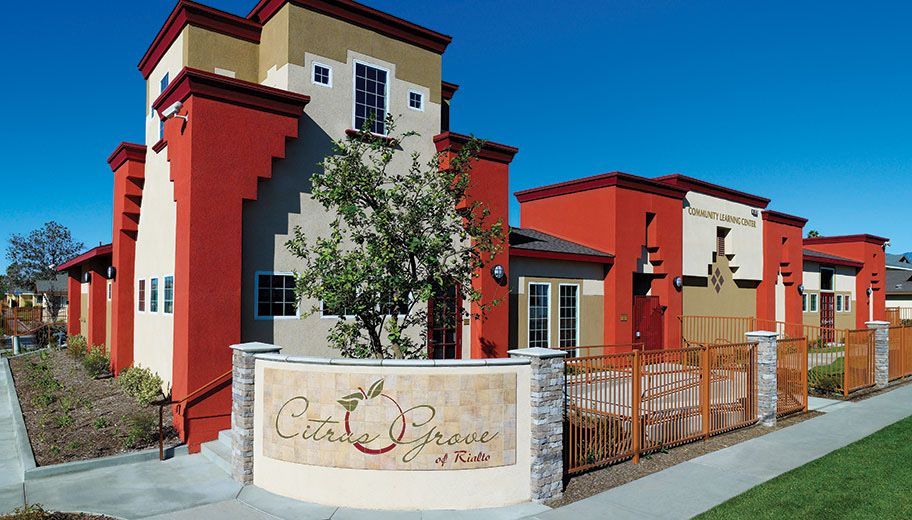
ONTARIO, Calif. – National CORE and the City of Ontario have secured a $1 million federal Community Project Grant to support a new affordable housing community that will deliver safer streets, reliable transit and opportunity for families along the Holt Boulevard corridor in downtown Ontario. The funding, provided by U.S. Rep. Norma Torres, was celebrated March 31 at National CORE’s Vista Verde community, located a block from the new property. Torres said affordable housing is the top request from her constituents and thanked city leaders and National CORE for working closely together to ensure those needs are being met. “Every family deserves a safe, affordable place to call home, and that starts with investments like this one,” she said. “I hear every day from constituents struggling with the cost of housing, which is why partnerships with organizations like National CORE are so critical. They do not just make promises, they deliver. I’m proud to have helped support this new community and the families who will call it home.” The new community, known as Vista Verde II, will provide 144 one-, two- and three-bedroom apartment homes for households earning 30% to 60% of the area median income (AMI) at 905 E. Holt Blvd., along with a raft of neighborhood improvements: Grove Avenue Trail Connector, a protected Class I bicycle and pedestrian path linking neighborhoods from Fourth Street to Holt Boulevard. ADA-accessible walking paths through Grove Memorial Park, creating safe pedestrian routes where none previously existed. Sidewalk repairs, ADA upgrades, traffic calming and crosswalk enhancements along Allyn Avenue, supporting Safe Routes to School and neighborhood safety. 10 new bus shelters along key transit corridors. Expansion of Sunday service on Omnitrans’ sbX Green Line, providing seven-day-a-week access to transit. Leaders from National CORE and the City of Ontario said Vista Verde II reflects the power of strong public-private partnerships to revitalize neighborhoods and address California’s critical affordable housing shortfall. “This project is part of a transformation of this community – transit, parks, sidewalks and, of course, vitally needed housing. It’s going to be beautiful. It’s been critical to have this partnership with the city and with Congresswoman Torres, who long has been a champion for our residents,” National CORE President Michael Ruane said. Ontario Mayor Paul Leon thanked Torres for helping bring needed workforce housing to Ontario. “Norma is always there for things like this, things that benefit the community. I care about people who care about people and that’s who we have here,” he said. Tuesday’s event also included remarks from Ellen, a single mom who moved to Vista Verde in 2024 after struggling with medical bills and rising rents that hit $2,000 a month for her one-bedroom home. “I worked for Walgreens for 20 years, but then I got sick – I got breast cancer. The rent just kept increasing and the bills just kept piling up. It got to the point where I had to pack myself up and go stay with my mom.” “I was so stressed going through my treatment, and I just kept looking for a new home the whole time. Then, I got the call. I couldn’t believe it. I just love, love, love it here,” she added. Ellen said she loves the activities provided at the community by the Hope through Housing Foundation, created by National CORE. Her 12-year-old son participates in summer programs and she has taken two free job training classes through CORE Academy. “I’m very thankful to National CORE and I pray to God that you continue to help families. You don’t know how much this means to us. If I didn’t have National CORE, I don’t know where I’d be right now,” she said. National CORE Chairman Jeff Burum said individuals like Ellen are why the organization is committed to building new affordable housing. “This is what we do every day. We believe in community, we believe in families,” he said. © National CORE

By UBJ Staff
•
March 3, 2026
San Bernardino County will receive nearly $7 million in federal funding to support a series of infrastructure and public safety improvements across the region. The funding, secured by members of the county’s congressional delegation, will help pay for upgrades to roads, animal shelters, and wastewater and sewer infrastructure, according to a statement posted on the county’s website. Behavioral health programs and the San Bernardino County Sheriff’s Department search and rescue team will also receive a portion of the funding. “This funding demonstrates what is possible when local priorities are elevated to the federal level,” said Supervisor Dawn Rowe, chair of the Board of Supervisors, in the statement. “We appreciate our congressional delegation securing federal resources that will have long-term benefits for San Bernardino County.” The funding is classified as Community Project Funding, a practice formerly known as earmarking. Community Project Funding allows members of Congress to secure federal dollars for projects in their districts, provided the requests are submitted during the annual federal appropriations process, according to the statement. How this Benefits the Inland Empire Economy Nearly $7 million in federal infrastructure investment represents more than facility upgrades — it strengthens the economic foundation of one of California’s fastest-growing regions. Modern sewer systems, improved transportation infrastructure, airport upgrades and enhanced emergency response capabilities make communities more attractive for business development, tourism and long-term residential growth. Infrastructure improvements also help local governments meet environmental standards and reduce risks that can slow development. For historically under-resourced communities such as Bloomington, Trona and parts of the High Desert, these investments can also help close infrastructure gaps that have limited economic expansion. In a region where population growth continues to outpace infrastructure investment, targeted federal funding like this helps ensure the Inland Empire remains competitive for new businesses, housing development and job creation.

By UBJ Staff
•
February 26, 2026
A hotel located at the center of one of the Inland Empire’s busiest travel corridors is helping support the region’s growing business travel, conference, and networking economy. The Delta Hotels by Marriott Ontario Airport , operated by Hogan Hospitality Group , offers modern accommodations and more than 22,000 square feet of event space adjacent to both Ontario International Airport and the Ontario Convention Center . For many Inland Empire businesses, professional associations, and community organizations, accessible meeting space near a major airport and convention center is an important asset for hosting conferences, training sessions, trade events, and networking gatherings. The hotel features 303 guest rooms and seven suites , designed to provide comfort and efficiency for both business and leisure travelers. Guests also have access to amenities including an outdoor pool and several dining options within the property. Meeting and Event Facilities The property offers 15 meeting rooms , including six breakout rooms, providing flexible space for corporate meetings, workshops, board meetings, and regional business events. The largest venue can accommodate up to 655 guests , making the hotel suitable for conferences, industry gatherings, nonprofit fundraisers, and business community events connected to the Ontario Convention Center and the broader Inland Empire economy. With Ontario increasingly serving as a hub for regional conferences and trade events, hotel meeting facilities like these help provide the infrastructure needed for organizations to bring people together for learning, collaboration, and business development. Dining and Guest Amenities The hotel provides several on-site dining options that serve both overnight guests and event attendees. The property’s café offers Starbucks coffee , providing quick-service beverages and light fare. PRIME Steakhouse offers an upscale dinner experience featuring premium steaks, while Sky Harbor Bar provides a social setting with craft drinks, music, and space for informal networking. For guests needing quick access to food and beverages, the Delta Pantry provides 24-hour grab-and-go items , including breakfast options and snacks. This amenity is available exclusively to Marriott Bonvoy Platinum, Titanium, and Ambassador Elite members . Supporting Ontario’s Convention and Business Travel Economy Hotels located near the Ontario Convention Center play a vital role in supporting business travel and regional events. “We’re excited to welcome Delta Hotels by Marriott Ontario Airport to our family of hotel partners,” said Michael Krouse, president of the Greater Ontario Convention & Visitors Bureau . “Their high-quality accommodations and commitment to exceptional service make them an ideal partner as we continue to support guests visiting the Ontario Convention Center. We look forward to working together to deliver outstanding experiences and exceptional hospitality for convention travelers.” About Delta Hotels by Marriott The Delta Hotels by Marriott brand was acquired by Marriott International in April 2015 and is designed as an upscale, full-service hotel brand focused on the needs of modern frequent travelers. Originally well established in Canada, the brand continues to expand across the United States and international markets. Why It Matters for the Inland Empire Small Business Community For small businesses, entrepreneurs, and nonprofit organizations, access to professional meeting and event space is an important part of building relationships and growing opportunities. Hotels near Ontario International Airport and the Ontario Convention Center often serve as gathering places for networking events, business workshops, association meetings, trade shows, and industry conferences. These events bring together entrepreneurs, service providers, investors, and community leaders, creating opportunities for collaboration, partnerships, and business growth. They also generate economic activity for nearby restaurants, transportation services, event vendors, and local retailers — helping circulate business spending throughout the Inland Empire economy. As the region continues to grow as a destination for conferences and business travel, hospitality venues that can host large meetings while also serving smaller professional gatherings help strengthen the infrastructure that supports entrepreneurship and regional economic development. For more information visit Delta Hotels Ontario Airport .

By Kim Anthony
•
February 9, 2026
The City of Fontana, California Economic Development Department is providing a series of free workshops designed to empower the local business community with practical knowledge and skills for success. The workshops are intended to help entrepreneurs strengthen their business operations while also providing participants the opportunity to receive one-on-one assistance applying for the Fontana Empowerment Loan Fund , a financing program that supports small business growth. All workshops are scheduled from 11 a.m. to 12:30 p.m. The first session, Record Keeping 101 , will take place on April 1 at the Heritage Neighborhood Center . The interactive workshop will introduce business owners to the fundamentals of organizing and maintaining business records. Topics will include managing sales and expense tracking, payroll documentation, tax reporting obligations, and both digital and manual recordkeeping systems. City officials say maintaining accurate records is essential for a financially healthy business. Strong recordkeeping practices not only help businesses remain compliant with IRS and state reporting requirements, but also provide valuable financial insights that support better planning and decision-making. The session will be led by Brian Kennedy Jr. , ecosystem director at AmPac Business Capital. Kennedy oversees the organization’s business resource center and works to connect entrepreneurs with capital, coaching, and other resources that support business growth. AmPac Business Capital operates as a network hub designed to help business owners access funding opportunities, professional guidance, and community support. Entrepreneurs interested in attending the workshop can register online. For questions or additional information, participants may contact the Fontana Economic Development Department at clozano@fontanaca.gov
Hospitality & Entertainment
By Kim Anthony
•
July 10, 2026
National CORE, one of the nation’s largest nonprofit developers and property managers of affordable housing, has closed approximately $103 million in bond financing to support the transformation of the Ontario Airport Hotel & Conference Center into Hyatt Regency Ontario, an upper-upscale, full-service hospitality destination near Ontario International Airport. The successful consummation of the bond offerings paves the way to a rapid renovation project that will reimagine the hotel, redefine hospitality in the Inland Empire and drive economic growth in neighboring communities. “This project represents the rebirth of an iconic property that has long stood at the gateway to our community,” said Jeff Burum, chairman of the board of directors for National CORE. “This is an investment in Ontario and in economic growth that elevates the region for residents, businesses, travelers and the organizations serving this community.” The project brings together the experienced team of Hyatt as franchisor, Manhattan Hospitality Advisors as hotel operator, M. Arthur Gensler Jr. & Associates, Inc. as architect and National CORE as owner and developer. “Hyatt Regency Ontario near a major airport will bring a unique value proposition centered on connectivity, convenience, and elevated full-service hospitality. The brand is designed to serve as a dynamic hub for business and leisure travelers by offering expansive meeting and event space, premium food and beverage experiences, flexible gathering areas, and seamless access for travelers in transit,” said Patrick Schumm, senior vice president of franchise operations and owner relations, Hyatt. “Beyond stays, Hyatt Regency hotels are built to attract conferences, corporate meetings, and regional events that generate sustained economic activity and community engagement. We are excited by National CORE’s vision and the opportunity to create a destination that delivers long-term value for travelers, local businesses, and the broader community.” The bond offerings also mark a major investment in the region and reflect confidence in the project team, the long-term vision for the property and National CORE’s financial strength. Investor demand for the offering was strong and well in excess of the par amount offered allowing JP Morgan, who served as the sole underwriter, to reduce interest rates to a blended rate for the entire financing (CPACE + Revenue Bonds) of slightly more than 6%. Robert Diaz, Executive Vice President and project lead with National CORE, noted that “Investors responded to the strength of National CORE’s balance sheet, our longstanding presence in the Inland Empire and our ability to execute complex development projects. This financing structure allowed us to align long-term community investment with a transformational hospitality project that will benefit the region for decades.” “The highly innovative financing structure we were able to arrange for National CORE was the result of strong collaboration between a team dedicated to making a success out of this effort and was driven by strong partnership from Jones Lang LaSalle (JLL), GreenRock Capital, FrostBrownTodd Gibbons, Chapman and Cutler, Orrick and JP Morgan,” said Fred Schuster of FGS Realty Advisors. “The complexity of structuring the first hospitality tax-exempt bond financing for JLL required creativity and a dedicated team of the best professionals in the business. National CORE’s A-plus credit rating, continued track record of improving the community through development, and National CORE’s vision and dedication to transform this asset were key factors in getting this transaction closed together,” said Marc Schillinger of JLL Capital Markets. The financing package included approximately $27.3 million in Property Assessed Clean Energy (PACE) bonds supporting eligible energy-efficiency improvements and approximately $74.5 million in hotel revenue bonds supporting renovation, construction and project-related costs. “It is great to work with the team at National CORE, which is a leader in building cost-contained, high-performance developments that minimize impact on natural resources and aligns perfectly with the purposes of PACE financing,” said Joe Euphrat, Co-Founder & Managing Principal of GreenRock. National CORE views the hotel investment as part of a broader long-term strategy to diversify revenue sources and strengthen organizational stability to further fuel its efforts in furtherance of its mission of providing affordable housing and resident services. National CORE also views the investment as part of a broader workforce development strategy through its “CORE Academy,” including future hospitality career pathways and training opportunities connected to the hotel industry. “Our mission has always been about investing in communities in ways that create lasting impact,” Burum added. “This project reflects that same philosophy. We are building something that serves the region today while creating opportunities for the future.” Illustration: National CORE, Inc.
By UBJ Staff
•
February 26, 2026
A hotel located at the center of one of the Inland Empire’s busiest travel corridors is helping support the region’s growing business travel, conference, and networking economy. The Delta Hotels by Marriott Ontario Airport , operated by Hogan Hospitality Group , offers modern accommodations and more than 22,000 square feet of event space adjacent to both Ontario International Airport and the Ontario Convention Center . For many Inland Empire businesses, professional associations, and community organizations, accessible meeting space near a major airport and convention center is an important asset for hosting conferences, training sessions, trade events, and networking gatherings. The hotel features 303 guest rooms and seven suites , designed to provide comfort and efficiency for both business and leisure travelers. Guests also have access to amenities including an outdoor pool and several dining options within the property. Meeting and Event Facilities The property offers 15 meeting rooms , including six breakout rooms, providing flexible space for corporate meetings, workshops, board meetings, and regional business events. The largest venue can accommodate up to 655 guests , making the hotel suitable for conferences, industry gatherings, nonprofit fundraisers, and business community events connected to the Ontario Convention Center and the broader Inland Empire economy. With Ontario increasingly serving as a hub for regional conferences and trade events, hotel meeting facilities like these help provide the infrastructure needed for organizations to bring people together for learning, collaboration, and business development. Dining and Guest Amenities The hotel provides several on-site dining options that serve both overnight guests and event attendees. The property’s café offers Starbucks coffee , providing quick-service beverages and light fare. PRIME Steakhouse offers an upscale dinner experience featuring premium steaks, while Sky Harbor Bar provides a social setting with craft drinks, music, and space for informal networking. For guests needing quick access to food and beverages, the Delta Pantry provides 24-hour grab-and-go items , including breakfast options and snacks. This amenity is available exclusively to Marriott Bonvoy Platinum, Titanium, and Ambassador Elite members . Supporting Ontario’s Convention and Business Travel Economy Hotels located near the Ontario Convention Center play a vital role in supporting business travel and regional events. “We’re excited to welcome Delta Hotels by Marriott Ontario Airport to our family of hotel partners,” said Michael Krouse, president of the Greater Ontario Convention & Visitors Bureau . “Their high-quality accommodations and commitment to exceptional service make them an ideal partner as we continue to support guests visiting the Ontario Convention Center. We look forward to working together to deliver outstanding experiences and exceptional hospitality for convention travelers.” About Delta Hotels by Marriott The Delta Hotels by Marriott brand was acquired by Marriott International in April 2015 and is designed as an upscale, full-service hotel brand focused on the needs of modern frequent travelers. Originally well established in Canada, the brand continues to expand across the United States and international markets. Why It Matters for the Inland Empire Small Business Community For small businesses, entrepreneurs, and nonprofit organizations, access to professional meeting and event space is an important part of building relationships and growing opportunities. Hotels near Ontario International Airport and the Ontario Convention Center often serve as gathering places for networking events, business workshops, association meetings, trade shows, and industry conferences. These events bring together entrepreneurs, service providers, investors, and community leaders, creating opportunities for collaboration, partnerships, and business growth. They also generate economic activity for nearby restaurants, transportation services, event vendors, and local retailers — helping circulate business spending throughout the Inland Empire economy. As the region continues to grow as a destination for conferences and business travel, hospitality venues that can host large meetings while also serving smaller professional gatherings help strengthen the infrastructure that supports entrepreneurship and regional economic development. For more information visit Delta Hotels Ontario Airport .

Breaking News
By Kim Anthony
•
July 15, 2026
The 21st Century ROAD to Housing Act, signed into law on July 11, 2026, represents one of the most comprehensive federal housing policy packages enacted in decades—and could create significant opportunities for Inland Empire communities, developers, small businesses and residents seeking greater economic mobility. According to an analysis by the Bipartisan Policy Center, the final legislation brings together provisions from more than 60 previously introduced bills, including 36 measures with bipartisan sponsorship. The package addresses nearly every part of the housing system, from development approvals and affordable housing financing to manufactured housing, homeownership, community banking and neighborhood revitalization. After months of negotiations, the Senate approved the legislation by an 85–5 vote on June 22, followed by a 358–32 vote in the House on June 23. What’s in the Final Deal? The final law combines major elements of earlier House and Senate housing proposals while preserving several negotiated compromises. Among the most notable provisions, the law: Raises the cap on the Rental Assistance Demonstration program by 100,000 units. Authorizes the Community Development Block Grant Disaster Recovery program for three years. Creates a new Moving to Work program cohort focused on economic opportunity and pathways to independence. Retains nine community banking provisions initially included in the House legislation. Restricts certain large institutional investors from purchasing additional single-family homes while maintaining an exception for properties constructed or acquired specifically for rental use. Establishes a HUD renter-outreach resource for tenants living in properties owned by institutional investors. For the Inland Empire , however, some of the law’s most consequential provisions are those designed to accelerate housing construction, unlock underused property and expand access to capital. More Resources for Cities That Build Housing The law establishes a $200 million annual Innovation Fund for local governments and tribal communities that demonstrate measurable increases in housing production. Communities could qualify by adopting policies such as streamlined permitting, density bonuses, zoning reforms and faster development approvals. The program is authorized for seven years. For Inland Empire cities confronting rapid population growth and housing affordability challenges, the fund could provide additional resources to modernize permitting systems, increase planning capacity and move housing projects through the approval process more efficiently. That could also create opportunities for local planning firms, architects, engineers, environmental consultants, technology providers and businesses that help cities improve development processes. New Support for Planning and Infrastructure The legislation creates a competitive HUD grant program to help cities, counties, tribal governments and regional planning agencies undertake housing-related planning and community development. Eligible activities include updating regulatory processes, increasing inspection capacity and coordinating housing development with transportation planning. This provision may be especially important for the Inland Empire , where housing growth must be coordinated with transportation, employment centers, schools, utilities and other infrastructure. It could help communities better connect new housing to major job corridors, transit systems and commercial districts—while generating contracting opportunities for local consultants, construction professionals and professional-service firms. Converting Vacant Buildings Into Housing The law also creates the Revitalizing Empty Structures Into Desirable Environments Act, or RESIDE Act, pilot program. The program will help local governments convert vacant commercial and industrial buildings into affordable housing, with priority given to economically distressed communities and Opportunity Zones. Across the Inland Empire, this could support the redevelopment of underused office buildings, aging shopping centers, vacant retail properties and obsolete commercial spaces. Adaptive-reuse projects can create opportunities for: General contractors and subcontractors Architects and engineers Environmental and remediation firms Interior designers Property managers Building-material suppliers Landscapers and maintenance providers Neighborhood-serving retailers and restaurants Transforming vacant buildings can also place new residents closer to existing businesses, helping restore foot traffic and consumer spending in older commercial corridors. More Affordable Housing Financing The law makes affordable housing construction an eligible use of Community Development Block Grant funding. It also increases the amount banks may invest in affordable housing and community development projects through public-welfare investments—from 15% to 20% of their capital and surplus. These changes could expand the financing available for affordable and mixed-income developments, particularly when federal resources are combined with state, county, city and private investment. For the Inland Empire development community , this could make it easier to assemble complex financing packages and move projects that might otherwise remain financially infeasible. It may also strengthen opportunities for community development financial institutions, minority depository institutions, mission-oriented lenders and nonprofit housing organizations. Faster Environmental Reviews Several sections of the law are intended to reduce duplication and delay in federal environmental reviews. The legislation expands categorical exclusions for certain federally supported housing activities, gives HUD greater authority to delegate environmental responsibilities to state and local governments, and streamlines reviews for smaller projects, infill developments and certain affordable housing activities. The reforms do not eliminate local or state development requirements. However, they may reduce the time and administrative expense associated with overlapping federal reviews. For developers, shorter approval timelines can lower carrying costs and reduce uncertainty. For small contractors and professional firms, projects that move forward more quickly can translate into more consistent work and faster payment cycles. Pre-Approved Housing Designs Through the Accelerating Home Building Act, local governments and tribes may receive grants to adopt pre-reviewed housing designs for accessory dwelling units, duplexes, townhomes and other forms of affordable housing. This could help Inland Empire cities standardize commonly requested designs and shorten review times for property owners and small-scale developers. Pre-approved plans could make it easier for: Homeowners to add accessory dwelling units. Small builders to complete infill projects. Families to create multigenerational housing. Property owners to generate rental income. Communities to add housing without relying solely on large developments. For entrepreneurs, this provision may create a new market for firms specializing in ADUs , prefabricated construction, permitting assistance, financing and property management. Expanded Opportunities in Manufactured and Modular Housing The legislation includes an entire title focused on manufactured and modular housing. It eliminates the permanent-chassis requirement for certain manufactured homes, increases FHA-insured manufactured housing loan limits, supports the preservation of manufactured housing communities and directs HUD to identify barriers facing modular housing developers. Manufactured and modular construction could be particularly valuable in the Inland Empire because it may allow housing to be produced more efficiently and at a lower cost than some traditional construction methods. The reforms may generate opportunities for local manufacturers, transportation companies, site-preparation contractors, installers, utility providers and businesses supporting manufactured-home communities. Greater Access to Small Mortgages The law authorizes an FHA pilot program designed to expand access to mortgages of less than $100,000. It also requires federal regulators to examine how fees and mortgage-originator compensation practices affect the availability of smaller loans. Although many Inland Empire homes cost substantially more than $100,000, small-dollar mortgages may still support the purchase or rehabilitation of manufactured homes, homes in certain rural areas and lower-cost properties requiring repairs. Greater access to responsible mortgage financing could help more renters begin building equity while creating additional business for community lenders, mortgage professionals, real estate agents, appraisers and housing counselors. Appraisal Workforce Opportunities The legislation reforms appraisal licensing and training, adds flexibility for trainee appraisers a nd authorizes grants supporting appraisal workforce development. This could create new career pathways for Inland Empire residents while helping address appraisal shortages that can delay real estate transactions. For workforce-development organizations, colleges and professional associations, the provision presents an opportunity to introduce more residents— including people from communities historically underrepresented in the profession —to appraisal careers. Strengthening Community Banks and Local Lending The final law retains nine provisions focused on community banks and credit unions. Among other changes, the legislation supports the formation of new community banks and minority depository institutions, establishes greater regulatory flexibility for smaller financial institutions and formalizes a mentor-protégé program pairing large banks with smaller, rural and minority-owned institutions. A stronger community banking sector could benefit Inland Empire entrepreneurs who often struggle to obtain financing from larger institutions. Locally focused banks and credit unions may be more willing to evaluate borrowers based on community relationships, business potential and local market knowledge. That could expand access to mortgages, construction financing, small-business loans and community development capital. Limiting Institutional Purchases of Single-Family Homes The Homes Are for People, Not Corporations provision restricts large institutional investors that own at least 350 single-family homes from purchasing additional newly available single-family homes. The law includes exceptions, including for institutional investors purchasing or constructing homes specifically intended for the rental market. The provision may give individual buyers a better opportunity to compete for certain homes, although its ultimate effect will depend on implementation and the availability of housing in each local market. For Inland Empire families, improved access to homeownership can support long-term wealth creation. Homeownership also generates economic activity for real estate professionals, lenders, insurance agents, contractors, furniture stores and home-service businesses. Why this Housing Bill is Important to Inland Empire Business and Communities Housing policy is also economic-development policy. When employees cannot afford to live near their jobs, businesses face longer commutes, higher turnover and greater difficulty recruiting workers. Housing instability can also affect attendance, productivity and household spending. Increasing the supply of housing at a variety of price points could help Inland Empire employers attract and retain workers while allowing more residents to live closer to employment opportunities. New housing development also supports a broad network of small and microbusinesses—not only large developers and construction companies. Projects require surveyors, electricians, plumbers, roofers, painters, landscapers, security firms, caterers, marketing companies, accountants, attorneys, insurance brokers and dozens of other local vendors. Once residents move in, they create demand for childcare, healthcare, retail, restaurants, transportation and personal services. An Economic-Mobility Opportunity For working families, housing is one of the most important foundations of economic mobility. Stable and affordable housing makes it easier for people to remain employed, pursue education, start businesses and accumulate savings. Homeownership can provide an opportunity to build intergenerational wealth, while affordable rental housing can give families the financial breathing room needed to invest in their futures. The new law also supports whole-home repair programs that can provide grants or forgivable loans to homeowners and landlords for property repairs and modifications. For lower-income homeowners and older adults, these resources could help preserve existing homes, prevent displacement and support aging in place. They could also generate work for local repair contractors and skilled tradespeople. What the Inland Empire Should Watch Next The passage of the legislation is only the beginning. Federal agencies must now develop regulations, launch grant programs and establish implementation timelines. Inland Empire cities, counties, housing authorities, developers, lenders and community organizations should begin identifying projects and partnerships that could benefit. Local leaders should pay particular attention to: HUD planning and housing-production grants The $200 million annual Innovation Fund Commercial-to-residential conversion funding Whole-home repair pilot programs Manufactured and modular housing reforms Community bank and minority depository institution initiatives Appraisal workforce-development grants Changes to CDBG and HOME funding Pre-approved housing design programs The most successful Inland Empire communities will likely be those that begin preparing early—building partnerships, identifying underused properties, reviewing local permitting systems and creating pipelines of projects that can compete for new federal resources . The Bottom Line The 21st Century ROAD to Housing Act will not solve the region’s housing affordability crisis on its own. Land costs, interest rates, construction expenses, infrastructure needs and local approval processes will remain significant challenges. However, the legislation provides new tools that could help Inland Empire communities build and preserve more housing, revitalize underused properties, strengthen local financial institutions and create pathways to homeownership. For the region’s business and development community, the law represents more than a housing package. It is a potential pipeline of investment, contracts, jobs, entrepreneurship and neighborhood renewal. Source: Bipartisan Policy Center, “Inside the Deal: What’s in the Final 21st Century ROAD to Housing Act,” updated to reflect the law enacted July 11, 2026.
By UBJ Staff
•
July 15, 2026
California's newly approved 2026–27 State Budget includes continued investment in Calbright College , signaling the state's ongoing commitment to expanding economic opportunity through education and workforce development. Following the budget's passage and Governor Gavin Newsom's signature, Calbright College President and CEO Ajita Talwalker Menon thanked state leaders for supporting an education model designed specifically for working-age adults. The investment reinforces California's strategy of helping adults earn career-focused credentials through flexible, online learning combined with personalized coaching and support—making education more accessible for people balancing work, family, and other responsibilities. For entrepreneurs and small business owners across the Inland Empire, this investment goes beyond education—it represents an opportunity to strengthen the local workforce. As businesses continue to struggle with hiring and retaining skilled employees, programs like Calbright can help workers develop in-demand skills in areas such as project management, information technology, cybersecurity, data analysis, and customer relationship management without leaving the workforce. A stronger talent pipeline benefits employers by: Expanding the pool of job-ready workers. Helping existing employees upskill while remaining employed. Reducing recruitment and training costs. Improving employee retention through career advancement opportunities. Supporting business growth with a more adaptable workforce. For entrepreneurs, the availability of flexible workforce training also makes it easier to hire individuals who are actively investing in their own professional development. Small business owners can encourage employees to pursue credential programs that strengthen skills without requiring traditional classroom schedules. A Boost for Economic Mobility The budget investment also supports California's broader goal of increasing economic mobility by creating more pathways into quality careers. For many adults—including career changers, parents returning to the workforce, veterans, and first-generation college students—flexible education can provide a faster route to higher wages and greater financial stability. Communities like the Inland Empire, where small businesses drive much of the local economy, stand to benefit as more residents gain the skills employers need while entrepreneurs gain access to a stronger, more competitive workforce. For the Urban Business Journal community, this is another reminder that investing in people remains one of the smartest investments any economy can make. A more skilled workforce doesn't just create better employees—it creates future entrepreneurs, stronger local businesses, and more resilient communities.
By Kim Anthony
•
July 14, 2026
Troy A. Small, founder and President of Copperwater Consulting Inc., has built a remarkable career defined by service, leadership, and entrepreneurial spirit. Based in Southern California, Copperwater Consulting is a certified Service-Disabled Veteran-Owned Small Business (SDVOSB) and California Disabled Veteran Business Enterprise (DVBE), specializing in providing expert consulting services. A Legacy of Military Service Troy’s professional journey began in the U.S. Marine Corps, where he served as a Heavy Machine Gunner. He attended recruit training at Marine Corps Recruit Depot (MCRD) in San Diego, California, followed by Marine Combat Training and Machine Gunner School at Camp Pendleton. His first assignment stationed him in K-Bay, Hawaii, where he deployed to the Gulf War and participated in Operations Desert Shield and Desert Storm as a Heavy Machine Gunner Team Leader. Following the war, military cutbacks forced Troy to transition into a new role. He chose Supply Administration, a decision that would profoundly shape his career. While stationed at Headquarters, Marine Security Guard Battalion in Quantico, Virginia, Troy discovered the Purchasing and Contracting (P&C) field. Drawn by the versatility and challenge of the role, he trained to become a P&C Specialist and later served at Headquarters and Service Battalion in Quantico. Excelling in Leadership Roles After his time in Quantico, Troy returned to MCRD San Diego as a Contracting Officer. He also served for three years as a Marine Corps Drill Instructor (DI), guiding six training cycles—three as a Green Belt, one as a Black Belt, and two as Series Chief Drill Instructor. During this time, he also held the position of Battalion Operations Chief, demonstrating his dedication to shaping the next generation of Marines. Troy’s career continued at the Regional Contracting Office at Camp Pendleton, where he served for four years before joining I Marine Expeditionary Force (I MEF) in 2007. In 2008, he deployed to Camp Fallujah, Iraq, as the Contracting Chief/Senior Enlisted Advisor for Contracts, supporting Operation Iraqi Freedom. He retired from the Marine Corps in August 2009, concluding a distinguished military career. Transition to Civilian Leadership After retiring, Troy transitioned into civilian life, working as a defense contractor supporting the U.S. Navy in San Diego. He later became a Navy employee, serving as a GS-13 program manager for six years. Despite his success, Troy’s entrepreneurial aspirations persisted. In January 2017, Troy founded Copperwater Consulting Inc., taking the first step toward his business ownership goals. A year later, he left his Navy position to dedicate himself fully to Copperwater. During this time, he also joined Skyway Acquisition as Vice President of Marketing and Sales, further broadening his expertise in consulting and business development. A Commitment to Excellence Troy’s journey from Marine Heavy Machine Gunner to entrepreneur exemplifies resilience, adaptability, and a steadfast commitment to excellence. Under his leadership, Copperwater Consulting continues to thrive, reflecting the values of integrity and service that define Troy’s career. Semper Fidelis, Troy’s Marine Corps motto, encapsulates his dedication to lifelong loyalty and service. His story inspires others to pursue their passions and lead with purpose, no matter where their journeys begin. For more information visit copperwaterconsulting.com
By Urban Business Journal · Inland Empire
•
July 10, 2026
Inland Empire entrepreneurs can access professional business consulting—at no cost.
By Kim Anthony
•
July 10, 2026
National CORE, one of the nation’s largest nonprofit developers and property managers of affordable housing, has closed approximately $103 million in bond financing to support the transformation of the Ontario Airport Hotel & Conference Center into Hyatt Regency Ontario, an upper-upscale, full-service hospitality destination near Ontario International Airport. The successful consummation of the bond offerings paves the way to a rapid renovation project that will reimagine the hotel, redefine hospitality in the Inland Empire and drive economic growth in neighboring communities. “This project represents the rebirth of an iconic property that has long stood at the gateway to our community,” said Jeff Burum, chairman of the board of directors for National CORE. “This is an investment in Ontario and in economic growth that elevates the region for residents, businesses, travelers and the organizations serving this community.” The project brings together the experienced team of Hyatt as franchisor, Manhattan Hospitality Advisors as hotel operator, M. Arthur Gensler Jr. & Associates, Inc. as architect and National CORE as owner and developer. “Hyatt Regency Ontario near a major airport will bring a unique value proposition centered on connectivity, convenience, and elevated full-service hospitality. The brand is designed to serve as a dynamic hub for business and leisure travelers by offering expansive meeting and event space, premium food and beverage experiences, flexible gathering areas, and seamless access for travelers in transit,” said Patrick Schumm, senior vice president of franchise operations and owner relations, Hyatt. “Beyond stays, Hyatt Regency hotels are built to attract conferences, corporate meetings, and regional events that generate sustained economic activity and community engagement. We are excited by National CORE’s vision and the opportunity to create a destination that delivers long-term value for travelers, local businesses, and the broader community.” The bond offerings also mark a major investment in the region and reflect confidence in the project team, the long-term vision for the property and National CORE’s financial strength. Investor demand for the offering was strong and well in excess of the par amount offered allowing JP Morgan, who served as the sole underwriter, to reduce interest rates to a blended rate for the entire financing (CPACE + Revenue Bonds) of slightly more than 6%. Robert Diaz, Executive Vice President and project lead with National CORE, noted that “Investors responded to the strength of National CORE’s balance sheet, our longstanding presence in the Inland Empire and our ability to execute complex development projects. This financing structure allowed us to align long-term community investment with a transformational hospitality project that will benefit the region for decades.” “The highly innovative financing structure we were able to arrange for National CORE was the result of strong collaboration between a team dedicated to making a success out of this effort and was driven by strong partnership from Jones Lang LaSalle (JLL), GreenRock Capital, FrostBrownTodd Gibbons, Chapman and Cutler, Orrick and JP Morgan,” said Fred Schuster of FGS Realty Advisors. “The complexity of structuring the first hospitality tax-exempt bond financing for JLL required creativity and a dedicated team of the best professionals in the business. National CORE’s A-plus credit rating, continued track record of improving the community through development, and National CORE’s vision and dedication to transform this asset were key factors in getting this transaction closed together,” said Marc Schillinger of JLL Capital Markets. The financing package included approximately $27.3 million in Property Assessed Clean Energy (PACE) bonds supporting eligible energy-efficiency improvements and approximately $74.5 million in hotel revenue bonds supporting renovation, construction and project-related costs. “It is great to work with the team at National CORE, which is a leader in building cost-contained, high-performance developments that minimize impact on natural resources and aligns perfectly with the purposes of PACE financing,” said Joe Euphrat, Co-Founder & Managing Principal of GreenRock. National CORE views the hotel investment as part of a broader long-term strategy to diversify revenue sources and strengthen organizational stability to further fuel its efforts in furtherance of its mission of providing affordable housing and resident services. National CORE also views the investment as part of a broader workforce development strategy through its “CORE Academy,” including future hospitality career pathways and training opportunities connected to the hotel industry. “Our mission has always been about investing in communities in ways that create lasting impact,” Burum added. “This project reflects that same philosophy. We are building something that serves the region today while creating opportunities for the future.” Illustration: National CORE, Inc.
By Urban Business Journal - Inland Empire
•
July 10, 2026
(Photo: National CORE)
By Kim Anthony
•
April 3, 2026
ONTARIO, Calif. – National CORE and the City of Ontario have secured a $1 million federal Community Project Grant to support a new affordable housing community that will deliver safer streets, reliable transit and opportunity for families along the Holt Boulevard corridor in downtown Ontario. The funding, provided by U.S. Rep. Norma Torres, was celebrated March 31 at National CORE’s Vista Verde community, located a block from the new property. Torres said affordable housing is the top request from her constituents and thanked city leaders and National CORE for working closely together to ensure those needs are being met. “Every family deserves a safe, affordable place to call home, and that starts with investments like this one,” she said. “I hear every day from constituents struggling with the cost of housing, which is why partnerships with organizations like National CORE are so critical. They do not just make promises, they deliver. I’m proud to have helped support this new community and the families who will call it home.” The new community, known as Vista Verde II, will provide 144 one-, two- and three-bedroom apartment homes for households earning 30% to 60% of the area median income (AMI) at 905 E. Holt Blvd., along with a raft of neighborhood improvements: Grove Avenue Trail Connector, a protected Class I bicycle and pedestrian path linking neighborhoods from Fourth Street to Holt Boulevard. ADA-accessible walking paths through Grove Memorial Park, creating safe pedestrian routes where none previously existed. Sidewalk repairs, ADA upgrades, traffic calming and crosswalk enhancements along Allyn Avenue, supporting Safe Routes to School and neighborhood safety. 10 new bus shelters along key transit corridors. Expansion of Sunday service on Omnitrans’ sbX Green Line, providing seven-day-a-week access to transit. Leaders from National CORE and the City of Ontario said Vista Verde II reflects the power of strong public-private partnerships to revitalize neighborhoods and address California’s critical affordable housing shortfall. “This project is part of a transformation of this community – transit, parks, sidewalks and, of course, vitally needed housing. It’s going to be beautiful. It’s been critical to have this partnership with the city and with Congresswoman Torres, who long has been a champion for our residents,” National CORE President Michael Ruane said. Ontario Mayor Paul Leon thanked Torres for helping bring needed workforce housing to Ontario. “Norma is always there for things like this, things that benefit the community. I care about people who care about people and that’s who we have here,” he said. Tuesday’s event also included remarks from Ellen, a single mom who moved to Vista Verde in 2024 after struggling with medical bills and rising rents that hit $2,000 a month for her one-bedroom home. “I worked for Walgreens for 20 years, but then I got sick – I got breast cancer. The rent just kept increasing and the bills just kept piling up. It got to the point where I had to pack myself up and go stay with my mom.” “I was so stressed going through my treatment, and I just kept looking for a new home the whole time. Then, I got the call. I couldn’t believe it. I just love, love, love it here,” she added. Ellen said she loves the activities provided at the community by the Hope through Housing Foundation, created by National CORE. Her 12-year-old son participates in summer programs and she has taken two free job training classes through CORE Academy. “I’m very thankful to National CORE and I pray to God that you continue to help families. You don’t know how much this means to us. If I didn’t have National CORE, I don’t know where I’d be right now,” she said. National CORE Chairman Jeff Burum said individuals like Ellen are why the organization is committed to building new affordable housing. “This is what we do every day. We believe in community, we believe in families,” he said. © National CORE
By UBJ Staff
•
March 3, 2026
San Bernardino County will receive nearly $7 million in federal funding to support a series of infrastructure and public safety improvements across the region. The funding, secured by members of the county’s congressional delegation, will help pay for upgrades to roads, animal shelters, and wastewater and sewer infrastructure, according to a statement posted on the county’s website. Behavioral health programs and the San Bernardino County Sheriff’s Department search and rescue team will also receive a portion of the funding. “This funding demonstrates what is possible when local priorities are elevated to the federal level,” said Supervisor Dawn Rowe, chair of the Board of Supervisors, in the statement. “We appreciate our congressional delegation securing federal resources that will have long-term benefits for San Bernardino County.” The funding is classified as Community Project Funding, a practice formerly known as earmarking. Community Project Funding allows members of Congress to secure federal dollars for projects in their districts, provided the requests are submitted during the annual federal appropriations process, according to the statement. How this Benefits the Inland Empire Economy Nearly $7 million in federal infrastructure investment represents more than facility upgrades — it strengthens the economic foundation of one of California’s fastest-growing regions. Modern sewer systems, improved transportation infrastructure, airport upgrades and enhanced emergency response capabilities make communities more attractive for business development, tourism and long-term residential growth. Infrastructure improvements also help local governments meet environmental standards and reduce risks that can slow development. For historically under-resourced communities such as Bloomington, Trona and parts of the High Desert, these investments can also help close infrastructure gaps that have limited economic expansion. In a region where population growth continues to outpace infrastructure investment, targeted federal funding like this helps ensure the Inland Empire remains competitive for new businesses, housing development and job creation.
By UBJ Staff
•
February 26, 2026
A hotel located at the center of one of the Inland Empire’s busiest travel corridors is helping support the region’s growing business travel, conference, and networking economy. The Delta Hotels by Marriott Ontario Airport , operated by Hogan Hospitality Group , offers modern accommodations and more than 22,000 square feet of event space adjacent to both Ontario International Airport and the Ontario Convention Center . For many Inland Empire businesses, professional associations, and community organizations, accessible meeting space near a major airport and convention center is an important asset for hosting conferences, training sessions, trade events, and networking gatherings. The hotel features 303 guest rooms and seven suites , designed to provide comfort and efficiency for both business and leisure travelers. Guests also have access to amenities including an outdoor pool and several dining options within the property. Meeting and Event Facilities The property offers 15 meeting rooms , including six breakout rooms, providing flexible space for corporate meetings, workshops, board meetings, and regional business events. The largest venue can accommodate up to 655 guests , making the hotel suitable for conferences, industry gatherings, nonprofit fundraisers, and business community events connected to the Ontario Convention Center and the broader Inland Empire economy. With Ontario increasingly serving as a hub for regional conferences and trade events, hotel meeting facilities like these help provide the infrastructure needed for organizations to bring people together for learning, collaboration, and business development. Dining and Guest Amenities The hotel provides several on-site dining options that serve both overnight guests and event attendees. The property’s café offers Starbucks coffee , providing quick-service beverages and light fare. PRIME Steakhouse offers an upscale dinner experience featuring premium steaks, while Sky Harbor Bar provides a social setting with craft drinks, music, and space for informal networking. For guests needing quick access to food and beverages, the Delta Pantry provides 24-hour grab-and-go items , including breakfast options and snacks. This amenity is available exclusively to Marriott Bonvoy Platinum, Titanium, and Ambassador Elite members . Supporting Ontario’s Convention and Business Travel Economy Hotels located near the Ontario Convention Center play a vital role in supporting business travel and regional events. “We’re excited to welcome Delta Hotels by Marriott Ontario Airport to our family of hotel partners,” said Michael Krouse, president of the Greater Ontario Convention & Visitors Bureau . “Their high-quality accommodations and commitment to exceptional service make them an ideal partner as we continue to support guests visiting the Ontario Convention Center. We look forward to working together to deliver outstanding experiences and exceptional hospitality for convention travelers.” About Delta Hotels by Marriott The Delta Hotels by Marriott brand was acquired by Marriott International in April 2015 and is designed as an upscale, full-service hotel brand focused on the needs of modern frequent travelers. Originally well established in Canada, the brand continues to expand across the United States and international markets. Why It Matters for the Inland Empire Small Business Community For small businesses, entrepreneurs, and nonprofit organizations, access to professional meeting and event space is an important part of building relationships and growing opportunities. Hotels near Ontario International Airport and the Ontario Convention Center often serve as gathering places for networking events, business workshops, association meetings, trade shows, and industry conferences. These events bring together entrepreneurs, service providers, investors, and community leaders, creating opportunities for collaboration, partnerships, and business growth. They also generate economic activity for nearby restaurants, transportation services, event vendors, and local retailers — helping circulate business spending throughout the Inland Empire economy. As the region continues to grow as a destination for conferences and business travel, hospitality venues that can host large meetings while also serving smaller professional gatherings help strengthen the infrastructure that supports entrepreneurship and regional economic development. For more information visit Delta Hotels Ontario Airport .
By Kim Anthony
•
February 9, 2026
The City of Fontana, California Economic Development Department is providing a series of free workshops designed to empower the local business community with practical knowledge and skills for success. The workshops are intended to help entrepreneurs strengthen their business operations while also providing participants the opportunity to receive one-on-one assistance applying for the Fontana Empowerment Loan Fund , a financing program that supports small business growth. All workshops are scheduled from 11 a.m. to 12:30 p.m. The first session, Record Keeping 101 , will take place on April 1 at the Heritage Neighborhood Center . The interactive workshop will introduce business owners to the fundamentals of organizing and maintaining business records. Topics will include managing sales and expense tracking, payroll documentation, tax reporting obligations, and both digital and manual recordkeeping systems. City officials say maintaining accurate records is essential for a financially healthy business. Strong recordkeeping practices not only help businesses remain compliant with IRS and state reporting requirements, but also provide valuable financial insights that support better planning and decision-making. The session will be led by Brian Kennedy Jr. , ecosystem director at AmPac Business Capital. Kennedy oversees the organization’s business resource center and works to connect entrepreneurs with capital, coaching, and other resources that support business growth. AmPac Business Capital operates as a network hub designed to help business owners access funding opportunities, professional guidance, and community support. Entrepreneurs interested in attending the workshop can register online. For questions or additional information, participants may contact the Fontana Economic Development Department at clozano@fontanaca.gov
