New E-Commerce Accelerator Helps Small Businesses Build Brands That Stand Out Online

Kim Anthony • April 1, 2026

(SAN BERNARDINO, CA). For many entrepreneurs, having a great product is only half the battle. Getting customers to notice it—and choose it over hundreds of competitors—is becoming one of the biggest challenges in today's digital marketplace.

That's why the Orange County Inland Empire Small Business Development Center (OCIE SBDC) has launched a new six-week E-Commerce Accelerator designed to help Inland Empire entrepreneurs strengthen their online businesses. The program focuses on selling through platforms like Amazon, Etsy, and Walmart Marketplace while teaching practical skills in branding, product positioning, photography, packaging, and marketplace optimization.

The timing couldn't be better.

As more consumers shop online, a business's first impression is often a product photo, a logo, or a product description—not a conversation with the owner.

More Than a Logo


One of the accelerator's featured sessions,
"Branding, Photography, Visual Content & Packaging," recognizes a growing reality for today's entrepreneurs: customers make purchasing decisions in seconds.

Whether selling handcrafted candles, specialty foods, apparel, beauty products, or home décor, a compelling brand can help a small business stand out in crowded online marketplaces.

The accelerator also covers customer positioning, market demand, financial feasibility, launch planning, and strategies for expanding into national and international marketplaces.

A New Opportunity for Product-Based Businesses


The program is open to both early-stage businesses and established companies looking to expand their reach through e-commerce. Participants will learn how to build stronger product listings, improve visual presentation, understand marketplace algorithms, and develop sustainable growth strategies.

For many Inland Empire entrepreneurs, it's an opportunity to compete with much larger companies—not by outspending them, but by building a clearer, more compelling brand.


A strong brand isn't just about looking professional. It helps businesses earn trust, communicate value, and attract loyal customers. In an online marketplace where shoppers often compare dozens of similar products, thoughtful branding can become a powerful competitive advantage.


For entrepreneurs by necessity and small manufacturers alike, investing in branding may be one of the highest-return investments they make.

Hosted by the
OCIE Small Business Development Center, the six-week accelerator helps product-based businesses strengthen their presence on Amazon, Etsy, Walmart Marketplace, and other e-commerce platforms. Topics include branding, photography, packaging, marketplace optimization, financial feasibility, and launch planning. 
By Kim Anthony July 16, 2026
(INLAND EMPIRE) For many small businesses, the next big opportunity isn't opening another storefront. It's setting up a tent. Across Southern California, pop-up markets, artisan fairs, food festivals, maker markets, and community events are becoming powerful platforms for entrepreneurs to introduce their products, build loyal followings, and grow their brands. From the Ontario Night Market to the Riverside Artswalk , these events are attracting thousands of visitors eager to discover local businesses, handcrafted products, specialty foods, and unique shopping experiences. For entrepreneurs, that's more than a busy weekend. It's a marketing strategy. Building Relationships Before Building a Store For years, launching a retail business often meant signing a long-term lease and investing thousands of dollars before meeting the first customer. Today's entrepreneurs are taking a different path. Pop-up events allow business owners to test products, gather customer feedback, refine pricing, and build brand awareness—often with far less risk than opening a permanent location. Many successful businesses began with a folding table, a canopy, and a willingness to introduce themselves to the community. More Than Making Sales Experienced vendors say the greatest value of a pop-up isn't always what happens at the cash register. It's what happens after the event. Every conversation becomes an opportunity to gain a social media follower, collect an email address, receive customer feedback, or create a repeat customer. For many entrepreneurs, the goal isn't simply selling a candle, T-shirt, pastry, or handcrafted gift. It's creating a customer who returns again and again. Creating Experiences Customers Remember Consumers today are increasingly looking for experiences, not just transactions. That's one reason community markets continue to grow in popularity. Visitors enjoy meeting the people behind the products, hearing the stories that inspired a business, watching demonstrations, tasting samples, and supporting local entrepreneurs. That personal connection is something online retailers often struggle to replicate. A Launchpad for New Businesses Pop-up events have also become an important entry point for first-time entrepreneurs. Many businesses begin by selling at farmers markets, neighborhood festivals, or arts events before eventually opening retail locations, expanding into wholesale, or launching e-commerce stores. For entrepreneurs by necessity, the model offers an affordable way to start building revenue while learning what customers truly want. Why It Matters The Inland Empire is home to thousands of talented makers, artisans, food entrepreneurs, designers, and small business owners. Community markets give those entrepreneurs visibility they might never achieve through advertising alone. As cities continue investing in placemaking and community events, pop-up markets are becoming more than weekend attractions. They're becoming business incubators. Make the Most of Your Next Pop-Up Event Before your next market or festival: Create a simple QR code that links to your website or newsletter. Collect customer email addresses for future promotions. Offer samples or product demonstrations when appropriate. Display your social media handles prominently. Tell the story behind your business—not just what you sell. Take photos and videos throughout the event for future marketing. Invite customers to visit your online store after the event. Local Events to Explore Entrepreneurs looking to increase visibility may want to explore opportunities through: Ontario Night Market Riverside Artswalk Local farmers markets throughout Riverside and San Bernardino counties Community festivals and seasonal maker fairs Chambers of Commerce and downtown association events UBJ Opportunity Take The most successful entrepreneurs don't wait for customers to find them—they go where customers are already gathering. Pop-up markets offer more than a place to sell products. They provide an opportunity to tell your story, test new ideas, build lasting relationships, and turn first-time shoppers into lifelong customers. In today's marketplace, a single weekend event can spark the beginning of a thriving business.
By Kim Anthony July 16, 2026
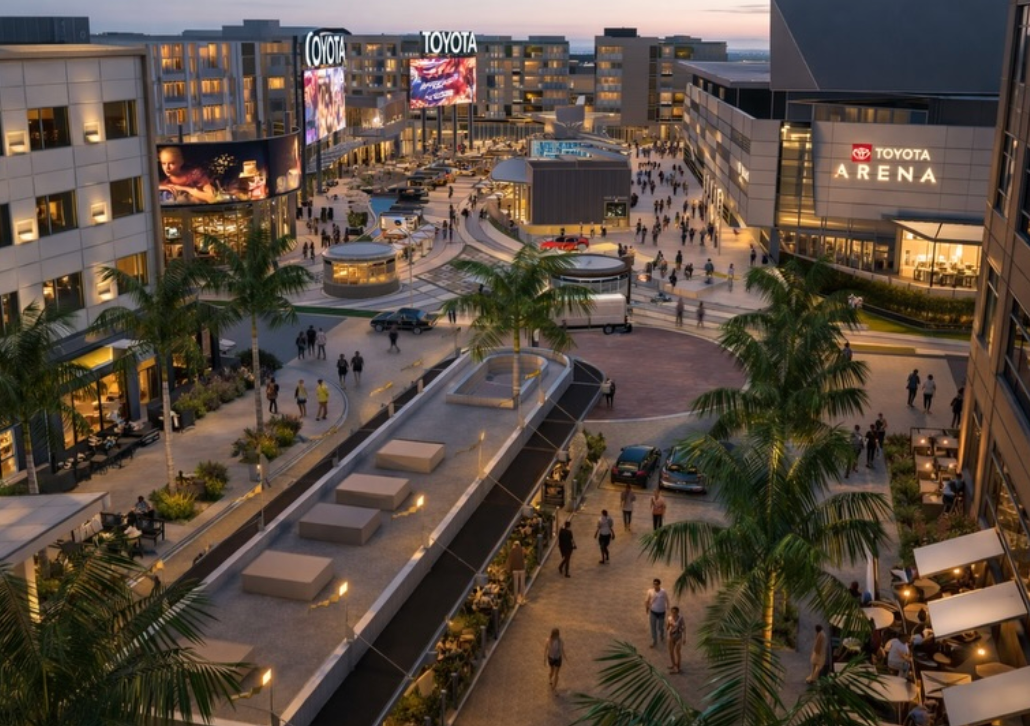
(ONTARIO, CA) For years, the Toyota Arena has been one of the Inland Empire's premier destinations for concerts, hockey, and major events. Soon, it may become the centerpiece of something much bigger. Just east of the arena, one of the region's most ambitious mixed-use projects—one designed to transform surface parking lots into a vibrant district where people can live, work, dine, and gather year-round is underway. For entrepreneurs and small business owners, the project represents more than new construction. It represents new customers. A New Downtown Experience The development envisions a walkable, mixed-use neighborhood adjacent to Toyota Arena featuring residential housing, restaurants, retail, public gathering spaces, and entertainment. At full build-out, Adept's long-range vision includes up to 2,000 residential units, approximately 130,000 square feet of retail and dining, and 75,000 square feet of public open space. The City of Ontario is planning complementary investments around the project, including an entertainment district envisioned with restaurants, live entertainment venues, a performing arts center, hotel accommodations, and additional public amenities. Together, the public and private investments could reshape the area into one of Southern California's most active entertainment destinations. More Than Apartments While new housing often captures headlines, mixed-use developments create something equally valuable: economic ecosystems. Residents need coffee shops, fitness studios, childcare providers, accountants, salons, pet services, restaurants, insurance agents, financial advisors, medical offices, and countless other neighborhood businesses. Every new apartment creates demand for local entrepreneurs. Every event at Toyota Arena becomes another opportunity for businesses to attract visitors before and after concerts, hockey games, and community events. Creating a Place to Gather A centerpiece of the vision is the proposed Ontario Arena Plaza, a two-acre public gathering space between Toyota Arena and the Adept development. Plans call for landscaped public spaces, water features, outdoor gathering areas, and restaurant concepts designed to encourage visitors to linger rather than simply arrive for an event and leave afterward. City planning documents describe the plaza as the "living room" of the future entertainment district—an economic catalyst connecting arena visitors with surrounding restaurants, retailers, and businesses. Why It Matters for Small Business Large developments often generate headlines because of their construction budgets. The bigger story is what happens after the ribbon cutting. Restaurants need local suppliers. Retailers need accountants and marketing firms. Property managers hire landscapers, maintenance companies, security firms, cleaning services, and technology providers. Professional service firms gain new clients. Independent retailers gain new foot traffic. Entrepreneurs gain access to a growing customer base. For Inland Empire business owners, developments like this can create years of opportunity—not just during construction, but long after the last building opens. A New Chapter for Ontario Ontario has spent the past decade establishing itself as a logistics, convention, and aviation powerhouse. Now it's adding another dimension: destination placemaking. The city's broader Arena District plan includes approximately 700 residential units, commercial space, public plazas, restaurants, entertainment venues, and future phases featuring a performing arts theater, hotel, and additional mixed-use development. Construction on the initial phase began in 2025. As the project succeeds, the district won't simply bring more visitors to Ontario. It could create one of the Inland Empire's strongest environments for entrepreneurs looking to open, expand, or relocate their businesses. Photo Credit: Ontario Ranch Life
Barista smiling at laptop behind coffee shop counter with menu boards and pastries
By Kim Anthony July 15, 2026
Artificial intelligence is no longer just for Silicon Valley. It's helping Inland Empire entrepreneurs write marketing campaigns, create social media content, answer customer emails, build business plans, design presentations, and save hours of administrative work every week. And local business advisors are making sure small businesses don't get left behind. The Orange County Inland Empire Small Business Development Center (OCIE SBDC) has begun integrating artificial intelligence into its training, workshops, and one-on-one advising, introducing entrepreneurs to practical tools like ChatGPT, Microsoft Copilot, Canva AI, and other business automation platforms. The goal isn't to replace people—it's to help entrepreneurs spend less time on repetitive tasks and more time growing their businesses. For many small business owners, time is their most limited resource. A restaurant owner may spend hours writing social media posts. A consultant may struggle to create proposals. A nonprofit leader may spend an entire day drafting a grant application. AI-powered tools can help produce a strong first draft in minutes, giving business owners more time to focus on serving customers and generating revenue. Across the Inland Empire, entrepreneurs are already putting AI to work in practical ways: Drafting marketing emails and newsletters Creating social media graphics and videos Writing product descriptions for online stores Summarizing meeting notes Developing business plans and pitch decks Conducting market research Responding to customer inquiries Translating content into multiple languages For many microbusinesses with one or two employees, AI functions like an extra member of the team—helping owners accomplish work that previously required hiring outside specialists. That can be especially meaningful for startups and entrepreneurs by necessity, where every dollar and every hour matter. Opportunity Through Technology While headlines often focus on whether artificial intelligence will replace jobs, local business advisors see another story unfolding. For small businesses, AI is becoming an equalizer. It allows entrepreneurs to produce professional-quality marketing, organize information more efficiently, improve customer service, and make data-informed decisions without needing a large staff or expensive software. Like the arrival of email, websites, or social media, AI represents another shift in how business gets done. Those who learn to use it thoughtfully may find themselves better equipped to compete in an increasingly digital economy. For the Inland Empire's small businesses, the question is no longer whether artificial intelligence is coming. It's already here. The opportunity is learning how to use it wisely.
Show More